
If you have renewed a health or life policy in the last few months, you may have noticed something missing from the bill: the tax line. Since late 2025, individual health and life insurance premiums no longer carry the 18% tax they used to. It is one of the more visible changes to come out of the “GST 2.0” reforms, and for most policyholders it means a lighter renewal bill with zero GST on health insurance.
This article explains what changed, which policies are covered and which are not, and, the part most people actually care about, how much you really save once the finer print is accounted for. Because the removal of the GST on insurance premium is genuinely helpful, but the real-world saving is not always a clean 18%, and it is worth understanding why. Everything here is for general awareness only, not tax or insurance advice.
The quick answer
Individual health and life insurance premiums have been exempt from GST since September 22, 2025, down from the earlier 18%. This means that on eligible individual policies, you now pay only the base premium with no tax added. Group and corporate policies, along with motor and most other general insurance, are not covered by this change.
What changed and when?
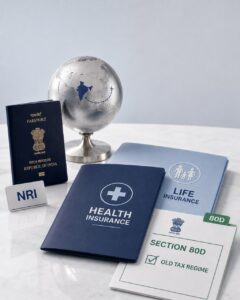
The decision came from the 56th GST Council meeting, held on September 3, 2025 and chaired by Finance Minister Nirmala Sitharaman. The Council recommended removing the 18% GST on individual life and health insurance premiums entirely, and the change took effect on September 22, 2025. In plain terms, the GST on insurance premium for eligible individual cover is now nil. It was part of the wider package of rate revisions popularly referred to as GST 2.0.
The exemption is broad within the individual category. It covers all individual life insurance, term plans, ULIPs and endowment policies, and all individual health insurance, including family floater and senior citizen plans, as well as the reinsurance of these policies. Riders and add-on covers that are billed as part of an eligible individual policy are generally covered too, since the whole product is sold for a single price.
One practical point worth knowing: the relief applies based on when the premium is paid. For a renewal, if the payment is made on or after September 22, 2025, it qualifies for the nil rate. GST that was already paid on earlier premiums is not refundable. You can read the government’s own explanation on the Department of Financial Services (Ministry of Finance) page, and the underlying rate notifications are published by the CBIC.
Looking for insurance policies? Get in touch with us today.
What still attracts 18% GST
This is the nuance that a lot of coverage skips over. The zero GST on health insurance relief is specific to individual life and health policies. Several common types of insurance were not part of this cut and continue to be taxed as before.
|
Type of insurance |
GST rate from 22 Sep 2025 |
|
Individual health (individual, family floater, senior citizen) |
0% (exempt) |
|
Individual life (term, ULIP, endowment) |
0% (exempt) |
|
Group / corporate / employer-sponsored health or life |
18% |
|
Motor insurance |
18% |
|
Other general insurance (home, travel, etc.) |
18% |
So if your health cover comes through your employer’s group policy, that premium is still taxed at 18%, the relief is aimed at policies you buy for yourself and your family directly.
How much you actually save with zero GST on health insurance
Here is where it helps to see the numbers, and also to be honest about them.
On the tax line, the saving is straightforward. Take an individual health policy with a base premium of ₹25,000. Earlier, 18% GST added ₹4,500, so you paid ₹29,500. Now you pay ₹25,000, a saving of ₹4,500 on that bill. A term plan with a ₹15,000 premium that earlier cost ₹17,700 now costs ₹15,000, saving ₹2,700. The bigger your premium, the bigger the number.
But “how much you actually save” has a second layer. When premiums became exempt, insurers lost the ability to claim Input Tax Credit (ITC) on the GST they pay on their own costs, agent commissions, reinsurance, technology and so on. That cost does not disappear; it can feed into base premiums over time. Industry estimates around the change suggested base premiums could edge up by roughly 5–6% for general insurers and more for standalone health insurers. In practice, this means the net benefit many policyholders see is often estimated in the region of 10–15%, rather than a clean 18%, depending on the insurer and the policy.
The honest summary: removing the tax is a real and recurring saving, and for most individual buyers the renewal bill is genuinely lighter. Just do not assume the full 18% automatically lands in your pocket, check your actual renewal notice against last year’s, since your insurer’s base premium is what ultimately decides the figure. That is what understanding zero GST on health insurance really comes down to: the tax is gone, but the base premium is still the number to watch.

NRIs and the exemption
The relief is attached to the type of policy, not to the type of buyer. Because the exemption applies to individual life and health insurance policies as a category, a Non-Resident Indian buying an eligible individual policy in India also gets the nil rate, regardless of whether the premium is paid in rupees or in foreign currency.
This is actually a simplification. Before the exemption, NRIs could seek a GST refund on such premiums, but only through a more documentation-heavy route tied to paying from a non-resident account. With individual health and life premiums now exempt across the board, that extra step falls away for eligible policies. If you are an NRI, it is still worth confirming the specifics with your insurer, since documentation practices can vary.
GST, premiums and your Section 80D deduction
A common question is what the nil GST does to your tax deduction. The short answer: Section 80D still works the same way, on the premium you actually pay.
Under Section 80D of the Income Tax Act, an individual can claim a deduction of up to ₹25,000 a year for health insurance premiums for self, spouse and dependent children, plus an additional ₹25,000 for parents, rising to ₹50,000 where the parents are senior citizens. The combined figure can reach ₹1,00,000 in some cases, and a sub-limit of ₹5,000 for preventive health check-ups sits within these caps. These limits are unchanged by the GST decision.
What changes is only the arithmetic of what you paid. Earlier, the amount you paid included 18% GST, and that full amount counted towards your 80D limit. Now the premium has no GST, so you simply claim the base premium you paid, up to the same limits. Two things are worth remembering: premiums must be paid through non-cash modes to qualify, and Section 80D is available only under the old tax regime, it is not available under the new (default) regime. Whether the old or new regime is better depends on your overall finances, so this is a good point to check with a qualified tax advisor rather than deciding on the deduction alone.
Need help with taxation? Give us a call today.
Frequently Asked Questions
Q: Is there GST on health insurance in 2026?
A: No. Individual health insurance premiums have been exempt from GST since September 22, 2025. On eligible individual policies you pay only the base premium.
Q: What’s the GST on life insurance premium now?
A: For individual life insurance, term plans, ULIPs and endowment policies, it is 0%, down from the earlier 18%, effective September 22, 2025.
Q: When did insurance GST become zero?
A: The change took effect on September 22, 2025, following the 56th GST Council meeting held on September 3, 2025.
Q: Does it apply to term plans and ULIPs?
A: Yes. All individual life insurance policies, including term plans, ULIPs and endowment plans, are covered by the exemption.
Q: Does zero GST cover group or corporate health cover?
A: No. Employer-sponsored group health and group life policies continue to attract 18% GST. The relief is for individual policies you buy directly.
Q: Does it apply to motor insurance?
A: No. Motor insurance was not part of this change and continues to be taxed at 18%, as do most other general insurance categories such as home and travel.
Q: Do NRIs get zero GST on health insurance?
A: Yes. Because the exemption applies to the individual policy category rather than the buyer’s residency, NRIs buying eligible individual health or life policies also get the nil rate, whether they pay in rupees or foreign currency. It is worth confirming the details with your insurer.
Q: How much will I save?
A: On the tax line, you save the 18% that used to be added, for example, ₹4,500 on a ₹25,000 premium. The net saving can be somewhat less than the full 18%, because insurers lost Input Tax Credit and may adjust base premiums; effective savings are often estimated around 10–15%. Compare your renewal notice with last year’s to see your real figure.
Q: Can I still claim 80D?
A: Yes, under the old tax regime, on the premium you actually pay, within the usual limits of ₹25,000 / ₹50,000 (for senior citizens). Section 80D is not available under the new tax regime.
This article is for educational and general information purposes only. It reflects publicly available information as of the date of publication and is not tax, insurance or financial advice, nor a recommendation of any specific policy, insurer or tax regime. GST rules, tax provisions and insurer pricing can change; please verify current details with official sources such as the Department of Financial Services and the CBIC, and consult a qualified tax or insurance professional before making any decision. Figures shown are illustrative.