
India’s insurance sector connects policyholders, insurers, intermediaries, reinsurers, banks and regulators but the information they rely on remains fragmented across institutions, formats and systems.
That could change with a proposal announced by the Insurance Regulatory and Development Authority of India (IRDAI) on September 1, 2026: the Public Insurance Registry (PIR), envisioned as a Digital Public Infrastructure for India’s insurance sector.
But there is an important caveat: the PIR does not exist yet as a consumer portal or operational registry. IRDAI is inviting stakeholder and public feedback until September 30, 2026, while its technical architecture, governance framework and implementation timeline are yet to be developed.
So, what exactly is IRDAI proposing, what could it mean for India’s insurance ecosystem, and what risks and questions remain unanswered? This article looks at all three.
What is IRDAI’s Public Insurance Registry?
The Public Insurance Registry (PIR) is IRDAI’s proposed Digital Public Infrastructure for India’s insurance sector.
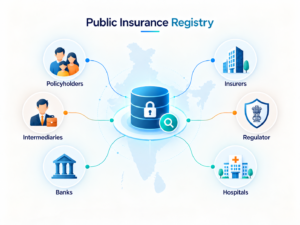
Simply put, it aims to make fragmented insurance information more connected, searchable and trustworthy. Authorised participants could discover, verify and exchange relevant information, while the underlying records remain with the institutions that hold them, rather than everything sitting in one central database.
IRDAI describes PIR as “population-scale, interoperable and non-exclusionary” infrastructure, aligned with the Sabka Bima Sabki Raksha (Amendment of Insurance Laws) Act, 2025, which came into effect on February 5, 2026.
Importantly, PIR is not a portal or product yet. It is a proposed national infrastructure initiative, and its architecture, governance and eventual implementation will depend on the ongoing consultation process. IRDAI, chaired by Ajay Seth as of September 2026, has invited feedback until September 30.
Why does India need a Public Insurance Registry?
Insurance data in India sits in silos. Each insurer maintains its own records; intermediaries hold theirs separately; claims are processed within insurer systems; fraud signals do not move efficiently across the sector; and a policyholder wanting a consolidated picture of their own coverage has no reliable single way to get it.
Better data infrastructure could help address these gaps, though implementation is far from straightforward.
Insurance information is fragmented
India has 50+ insurers across life, non-life and health, with hundreds of thousands of agents and intermediaries using different systems and data standards.
So, one policyholder can have multiple policies with no single, reliable view of their coverage , creating friction for customers, lenders and regulators alike.
The result? Repeated KYC, manual verification, slower claims, harder fraud detection and underwriting based on incomplete data.
Insurance claims and policy information can be difficult to connect
Fragmented data affects almost every stage of insurance from slower claims and repeated documentation to weaker fraud detection and less accurate underwriting. Without a shared view of customer and policy data, each insurer largely works with its own information.
Unclaimed insurance money is a visible symptom
The impact is also visible in unclaimed money. In FY24, ₹20,062 crore remained unclaimed with life insurers. Across the broader financial services sector, the figure was close to ₹1.9 trillion in late 2025.
One stated use of PIR is to help identify unclaimed amounts and connect policy information with beneficiaries.
Need help with insurance? Snazzy Wealth can help you with reviewing and choosing the best insurance for your needs.
How will the Public Insurance Registry work?
Think of it less as one giant database and more as a common layer that helps different insurance institutions talk to each other.
The policyholder’s identity is verified, the relevant information is found through PIR, and authorised parties can access only what they need — whether that’s an insurer, intermediary, lender or regulator.
Importantly, the data stays with whoever originally holds it. PIR simply creates the common standards and controlled pathways needed to access and exchange it.
In other words, it connects the dots without putting everything in one place.
Data remains with the institutions holding it

But there’s an important distinction: PIR is not meant to become a giant warehouse of every insurance policy in India.
Think of it as a common connecting layer. It would help authorised participants discover and verify information held by different institutions, with controls such as role-based access, purpose limits, data masking and audit trails.
And insurers wouldn’t have to give away their competitive secrets. Pricing, underwriting rules and product strategies would remain protected.
So, who would run this infrastructure? IRDAI has proposed converting the Insurance Information Bureau of India (IIB) into a not-for-profit company, wholly owned by IRDAI, to set up and operate PIR under a separate regulatory framework.
What information could the PIR connect?
|
Information |
Potential use |
|
Policy information |
Verify active and previous policies |
|
Claims information |
Claims servicing and risk assessment |
|
Policyholder information |
Faster onboarding and servicing |
|
Intermediary information |
Verification and distribution integrity |
|
Grievance information |
Better tracking and resolution |
|
Risk and exposure information |
Underwriting and reinsurance |
|
Anonymised industry data |
Research and market analysis |
|
Coverage information |
Identify protection gaps |
|
Unclaimed amounts |
Connecting benefits to policyholders and nominees |
Important: access to each category would depend on the proposed architecture, the participant’s authorisation, and the applicable privacy, consent and purpose-limitation framework. Not every item would be visible to every participant, and some categories (such as commercially sensitive pricing data) are explicitly excluded from cross-institutional access.
Who could use the Public Insurance Registry?
Policyholders
What would this mean for you as a customer?
Less hunting for information. PIR could give policyholders a clearer view of their policies, premiums, claims, grievances and unclaimed amounts across insurers.
It could also simplify onboarding, help verify whether a seller is licensed, and make it easier for beneficiaries to find unclaimed policies.
Insurance companies
For insurers, the real value is better data to make better decisions.
It could strengthen underwriting, improve claims management and make fraud easier to spot.
It could also reduce the effort involved in regulatory reporting.
Insurance intermediaries
For agents and intermediaries, it could mean less paperwork and more informed conversations.
Faster onboarding, easier policy verification and better visibility into customer needs could help them spend more time advising and less time collecting documents.
Reinsurers
Reinsurers could benefit from something they often lack today: standardised industry-wide data.
Better access to exposure, loss and catastrophe information could help them assess risk and allocate capital more effectively.
Banks and other financial institutions
For lenders, the use case is straightforward.
Need to know whether a borrower has an active insurance policy or whether collateral is adequately insured? PIR could make that verification easier, subject to authorisation and consent.
Regulators and government agencies
For regulators, it comes down to visibility.
Aggregated and anonymised data could help identify protection gaps, spot underserved segments and support better regulation and policy decisions.
How could PIR change insurance for policyholders?
- Easier access to multiple insurance policies. A potential consolidated view of all policies across carriers, status, benefits, premium and claim history.
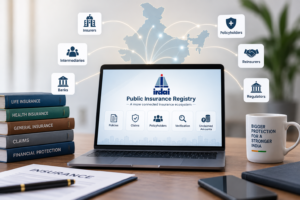
- Easier policy servicing. Verified information that does not need to be submitted repeatedly at each insurer or intermediary.
- Better claims visibility. Improved information flow between the parties involved in a claim, potentially reducing processing time and friction.
- Easier identification of forgotten or unclaimed policies. With approximately ₹20,062 crore of unclaimed amounts sitting with life insurers alone at end-FY24, the ability to connect a policy to a beneficiary or nominee is one of PIR’s most directly valuable proposed functions.
- More informed insurance decisions. Standardised product information and comparison could help consumers better understand existing coverage and identify gaps.
- Potentially faster onboarding. Verified information at the point of application or servicing could reduce the documentation burden.
- Better identification of insurance gaps. Particularly relevant from a financial-planning perspective, understanding what is and is not covered is a necessary first step to addressing gaps.
Get in touch with us today to know more about insurance policies and updates.
How could PIR affect insurance companies?
Better data could mean better risk assessment, smarter products, faster claims and stronger fraud detection.
The logic is simple: better-connected data → better underwriting → potentially better pricing and products.
But there’s a catch. PIR is still at the consultation stage. What it delivers will depend on data availability, privacy safeguards, legal requirements and technology readiness.
And better data doesn’t automatically mean cheaper insurance.
Could PIR make insurance cheaper?
Not necessarily. PIR could reduce information gaps, improve risk assessment, cut operational friction and make comparison easier. That could improve efficiency and competition.
But premiums ultimately depend on much more like claims, medical costs, catastrophe risk, reinsurance, operating costs, regulation and competition.
So PIR could make insurance more efficient over time. Cheaper insurance is possible, but it is not a guaranteed outcome.
PIR and Bima Sugam: What’s the difference?
These are two distinct but complementary pieces of India’s broader insurance digitalisation push, and it is easy to confuse them.
|
Public Insurance Registry |
Bima Sugam |
|
|
Core purpose |
Insurance data and information infrastructure |
Digital insurance marketplace and platform |
|
Focus |
Data connectivity and interoperability |
Buying, servicing and managing insurance |
|
Main users |
Wider insurance ecosystem |
Consumers, insurers and intermediaries |
|
Role |
Information layer |
Distribution and service layer |
|
Relationship |
Could support the broader ecosystem |
Could potentially leverage connected insurance infrastructure |
The two are connected, but they are not the same thing.
A March 2026 stakeholder discussion highlighted the need to align PIR and Bima Sugam so customers can access insurance services more seamlessly.
Think of Bima Sugam as the marketplace, where insurance can be bought and managed.
PIR is the information layer underneath, designed to connect the wider ecosystem and make insurance data more accessible and trustworthy.
For the two to work well together, strong collaboration across the industry will be key.
Is PIR the same as an insurance database?
Not exactly. IRDAI’s current proposal describes PIR as an interoperable information infrastructure rather than simply a centralised warehouse containing every insurance record. The original institutions retain ownership of their underlying records, while PIR facilitates controlled access through lightweight references, governed copies, or anonymised aggregates. The distinction matters because it affects the privacy, cybersecurity and governance framework that needs to be built around it.
What are the main benefits of the Public Insurance Registry?
|
Stakeholder |
Potential benefit |
|
Policyholders |
Easier access, servicing, claims visibility, and unclaimed-amount identification |
|
Insurers |
Better underwriting, product design and fraud detection |
|
Intermediaries |
Faster onboarding, better verification and more informed advisory |
|
Reinsurers |
Standardised exposure, loss and catastrophe information |
|
Banks |
Insurance verification for lending and collateral |
|
Regulators |
Better supervision and protection-gap analysis |
|
Researchers |
Anonymised data for market analysis |
|
Government |
Protection-gap insights and public-policy planning |
What are the risks and challenges of PIR?
The potential is significant. So are the risks.
Data privacy
Insurance data can include sensitive financial and health information.
Who can access it, why, and under what safeguards will be critical. PIR proposes role-based access, purpose limits, masking and audit trails — but these safeguards need to be built into the architecture from the start.
Cybersecurity
A system connecting insurers, banks, intermediaries, reinsurers and regulators would be a high-value cyber target.
Encryption, security standards and incident response will be crucial.
Consent management
Consent needs to mean more than clicking “accept”.
Customers should know who is accessing their data, why, for how long and what recourse they have. Making this work at population scale will be challenging.
Data accuracy
Connected data is only useful if it is accurate.
A wrong policy status, claim record or identity could affect underwriting, claims, lending and regulatory decisions. Strong correction mechanisms will be essential.
Data standardisation
Different insurers use different systems, formats and terminology.
Getting them to speak the same data language will be a major coordination challenge, especially across legacy systems.
Commercial confidentiality
Insurers will also want clarity on what gets shared and what stays private.
IRDAI has said sensitive information such as pricing, underwriting rules and product strategies will remain protected. The challenge will be defining and enforcing those boundaries.
Implementation complexity
Building PIR is one thing. Connecting the entire ecosystem is another.
Common standards, data-sharing protocols, legacy-system integration, governance and cybersecurity will all need to work together. That is likely to be one of PIR’s biggest practical challenges.
What did insurers say about PIR?
The March 17, 2026 IRDAI stakeholder discussion in New Delhi brought together senior insurance industry representatives. Key concerns included compliance, data governance, cybersecurity, interoperability, data ownership, sharing protocols and standardisation—issues also reflected in the September 2026 consultation paper.
What is the current status of IRDAI’s Public Insurance Registry?
- Status: Proposed, consultation stage
- Consultation paper released: September 1, 2026
- Feedback deadline: September 30, 2026
- Operational for consumers: Not operational for consumers yet
- Final technical architecture: Not yet finalized (IRDAI is proposing to convert the Insurance Information Bureau of India (IIB) into a wholly owned not-for-profit company to operate it)
- Confirmed launch date: None announced
- Immediate action required for policyholders: None
The proposal presently represents a consultation framework rather than a statement that the proposed PIR has already become an operational or binding regulatory requirement. IRDAI has proposed a phased approach, with different use cases to be developed into functional and technical specifications as the initiative progresses.
When will the Public Insurance Registry launch?
IRDAI has not established a publicly confirmed operational launch date in the current consultation-stage proposal. The framework, technical architecture, governance, consent mechanisms and implementation arrangements all need to be developed through the regulatory process. September 30, 2026 is the consultation-feedback deadline, not a launch date. Anyone reading “PIR deadline September 30” should understand that this refers to the feedback period, not the start of a consumer-facing service.
What could PIR mean for India’s insurance sector?
If implemented effectively, the PIR proposal points in five directions for the industry:
- From fragmented data to interoperable insurance information. A sector where verified insurance information flows efficiently between authorised participants rather than being locked in institutional silos.
- From document-heavy processes to digital verification. Reduced reliance on paper-based or manually verified documentation at each stage of the insurance lifecycle.
- From reactive claims management to data-driven risk management. Cross-institutional data could support faster claims processing, stronger fraud detection and more accurate underwriting over time.
- From product selling to better suitability and personalisation. A richer data environment could enable insurance to be more accurately matched to individual circumstances and protection needs.
- From isolated insurers to a connected insurance ecosystem. A shared information layer on which innovation can be built, new products, distribution models, and regulatory approaches, rather than each participant operating from its own island.
The key caveat in every case: these are directions PIR could enable, not outcomes it guarantees. Implementation quality, governance, industry adoption, legal frameworks and technology execution will all determine whether those directions are realised.
The bigger picture: India’s digital insurance infrastructure
PIR is part of a larger push to build digital infrastructure for insurance.
The IIB already plays a data role, while Bima Sugam is being developed as the distribution and service layer. The National Health Claims Exchange (NHCX) shows how standardised data exchange can work in health insurance.
They are different systems, but the ambition is shared: make insurance information flow as efficiently as premiums do.
What does PIR mean for insurance intermediaries?
For intermediaries, the impact could be very practical.
Less paperwork, faster onboarding and easier policy verification could make everyday operations smoother. Better visibility into a customer’s existing coverage could also help identify protection gaps and recommend products more effectively.
But the bigger shift is in the role of the intermediary.
As insurance becomes more digital and connected, product access alone may not be enough. Advisory quality, customer service and the ability to make sense of better data could become the real differentiators.
In other words, distribution could move from being transaction-led to advice-led.
Frequently Asked Questions
Q: What is the IRDAI Public Insurance Registry?
A: The Public Insurance Registry (PIR) is a proposed Digital Public Infrastructure for India’s insurance sector. IRDAI envisions it as an interoperable information layer enabling authorised participants to discover, verify and exchange relevant insurance information, while the underlying data remains with the institutions that hold it. It is currently at the consultation stage and is not yet operational.
Q: Why is IRDAI proposing a Public Insurance Registry?
A: Insurance data in India is highly fragmented across dozens of insurers, intermediaries and other participants, creating inefficiencies in claims processing, fraud detection, underwriting and customer servicing. PIR is intended to address these information and interoperability gaps, potentially making the sector more connected, transparent and consumer-friendly.
Q: Is the Public Insurance Registry operational?
A: No. As of September 2026, PIR is a consultation-stage proposal. IRDAI released the consultation paper on September 1, 2026, and invited feedback until September 30, 2026. The technical architecture, governance framework and implementation timeline remain to be developed.
Q: When will the Public Insurance Registry launch?
A: No confirmed operational launch date has been announced. September 30, 2026 is the deadline for public feedback on the consultation paper, not a launch date. The phased implementation approach means different use cases will be developed progressively as the initiative moves forward.
Q: Will PIR show all my insurance policies?
A: If implemented as proposed, PIR could enable policyholders to access a consolidated view of their policies across insurers. However, the exact functionality, access mechanisms and consent framework are still to be defined. Nothing is currently available, the proposal is still in the consultation phase.
Q: How could PIR help insurance policyholders?
A: PIR could potentially make it easier to track policies across multiple insurers, identify unclaimed amounts, simplify policy servicing, improve claims visibility, and compare insurance products. All these are proposed benefits, not confirmed features, they depend on how the final system is designed, governed and implemented.
Q: Will PIR make insurance premiums cheaper?
A: Not necessarily. Better data could support more accurate underwriting and operational efficiencies, and greater transparency could intensify competition. But premiums depend primarily on claims experience, medical costs, operating expenses, reinsurance and competition, not data infrastructure. PIR could contribute to efficiency, but it does not automatically reduce premiums.
Q: What is the difference between PIR and Bima Sugam?
A: PIR is proposed as the underlying data and information infrastructure, the layer that makes insurance information more connected and verifiable across the sector. Bima Sugam is being built as a digital marketplace and service platform where insurance can be bought and managed. They are complementary but distinct: PIR is the information layer; Bima Sugam is the distribution and service layer.
Q: What are the privacy risks of the Public Insurance Registry?
A: The main risks relate to data privacy, cybersecurity, consent management and data accuracy. Insurance data includes sensitive financial and health information. The consultation paper proposes role-based access, purpose limitations and data masking, but these frameworks need to be architecturally embedded and legally enforced. Industry participants have specifically raised cybersecurity and data-governance concerns.
Q: What is the deadline for feedback on IRDAI’s PIR proposal?
A: September 30, 2026. IRDAI has invited comments from stakeholders and the public on the consultation paper, including its data architecture, identity framework, standards, privacy safeguards, governance and implementation. Feedback can be submitted to IRDAI directly. After the consultation period closes, IRDAI will review responses and develop the next stage of the regulatory and technical framework.
Sources: IRDAI consultation paper on the proposed Public Insurance Registry, released September 1, 2026; Business Standard (September 1-2, 2026); IRDAI Annual Report FY24; IRDAI stakeholder discussion, March 17, 2026. The official IRDAI consultation paper is available at irdai.gov.in. Feedback can be submitted directly to IRDAI before September 30, 2026.
This article is for educational and general information purposes only. It reflects publicly available information as of the date of publication (September 2026) and is not insurance, financial, legal or regulatory advice. The PIR remains a consultation-stage proposal; no features, timelines or implementation details are confirmed. Please verify the current status of any proposal with official IRDAI communications before acting.